
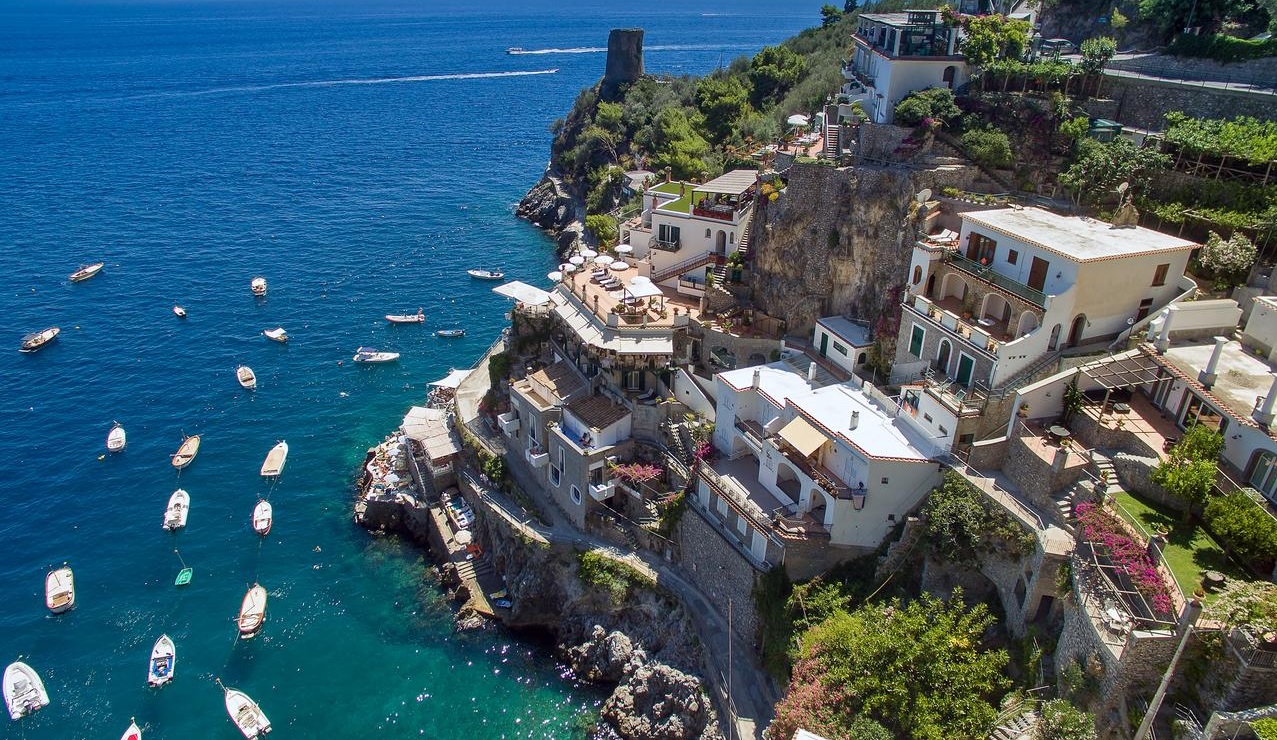
Quick answer: Praiano is the best-kept secret on the Amalfi Coast — wedged between Positano and Conca dei Marini, with two excellent beaches, a west-facing cliff that produces the best sunsets on the coast, and a fraction of the crowds and prices of its famous neighbors. If you want the Amalfi Coast experience without the Positano price tag and chaos, stay here.
We have a soft spot for Praiano. It’s the town you discover when you stop chasing the famous names and start paying attention to what’s actually in between them. We’ve driven past it dozens of times on the motorcycle, stopped for lunch, and kept going. Then one year we stayed for two nights — and understood immediately why people who know the coast well end up here.
Praiano has around 2,000 permanent residents, no cruise ship pier, no famous Instagram viewpoint with a queue, and no pretense. It’s a working coastal village that happens to be sitting on one of the most beautiful stretches of the SS163. The sunsets face directly west, toward Capri and the Li Galli islands. The beaches are small, pebbly, and remarkably clear. The prices are 30–40% lower than Positano for equivalent quality. And it sits exactly between Positano and Amalfi, which makes it the most logistically sensible base on the western coast.
Why Praiano, Not Positano
This is the question most people are really asking when they search for Praiano. The answer is honest: it depends on what you want.
Positano is more dramatic, more iconic, more photogenic in the Instagram sense. If this is your first and possibly only time on the Amalfi Coast, Positano deserves at least one night. But Praiano is what you choose on the second trip, when you know better — quieter streets, fewer people, the same sea, the same light, the same lemon groves, at prices that don’t make you wince every time you sit down for a meal.
Praiano also faces west, which Positano doesn’t. Every evening, from the cliffs and terraces of Praiano, the sun sets directly over the sea in the direction of Capri. The sky turns pink, then orange, then deep red behind the silhouettes of the Li Galli islands. It’s one of the genuinely great daily experiences on this coast, and it happens for free, every evening, from any terrace in town.
The Two Praiano Neighborhoods You Need to Know
Praiano is actually two settlements merged over time:
Vettica Maggiore — the upper part, where most residents live and where the main road (SS163) passes through. The church of San Gennaro with its majolica dome is here, along with most restaurants, bars, and guesthouses. This is the “town” in the conventional sense.
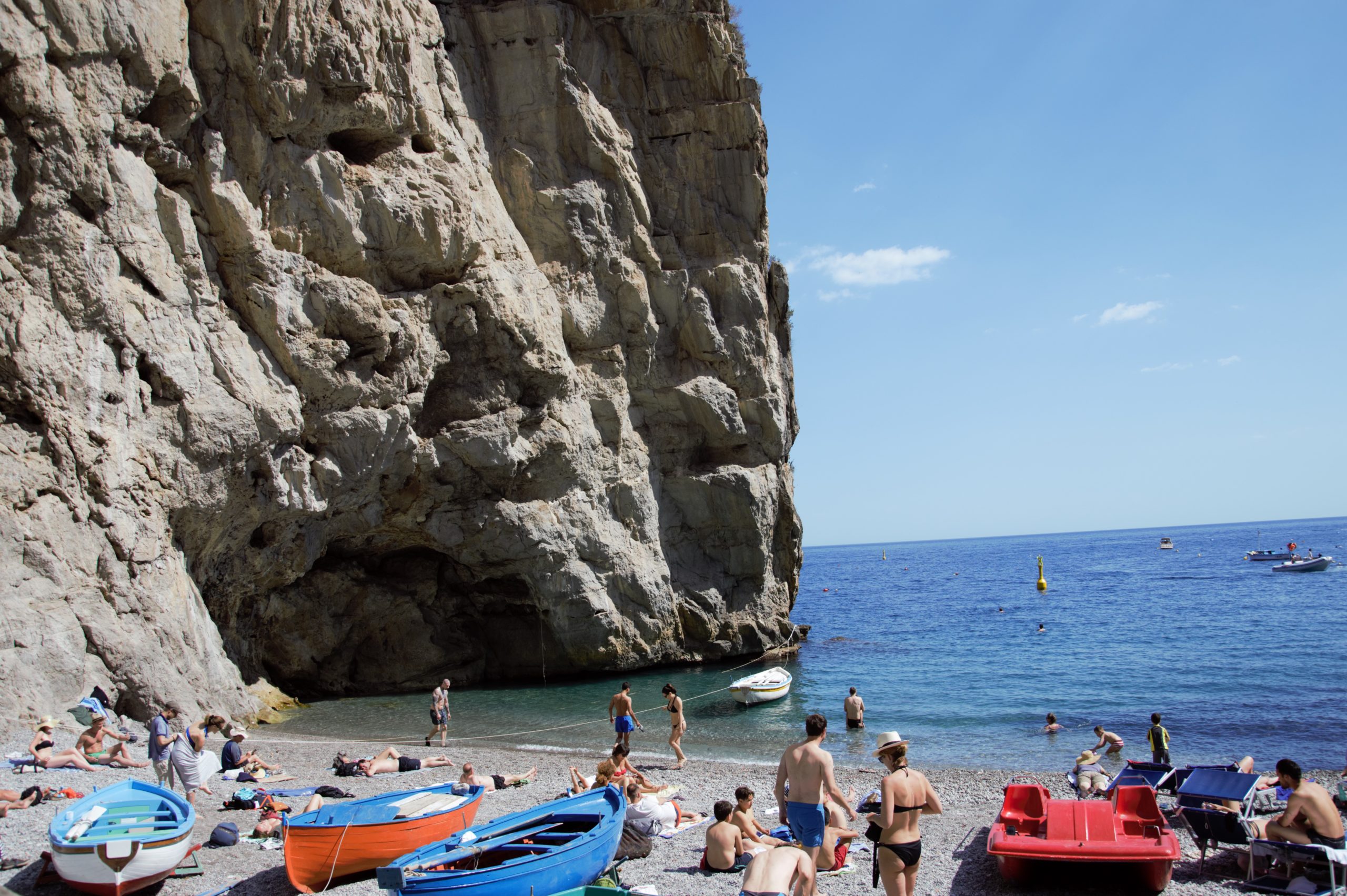
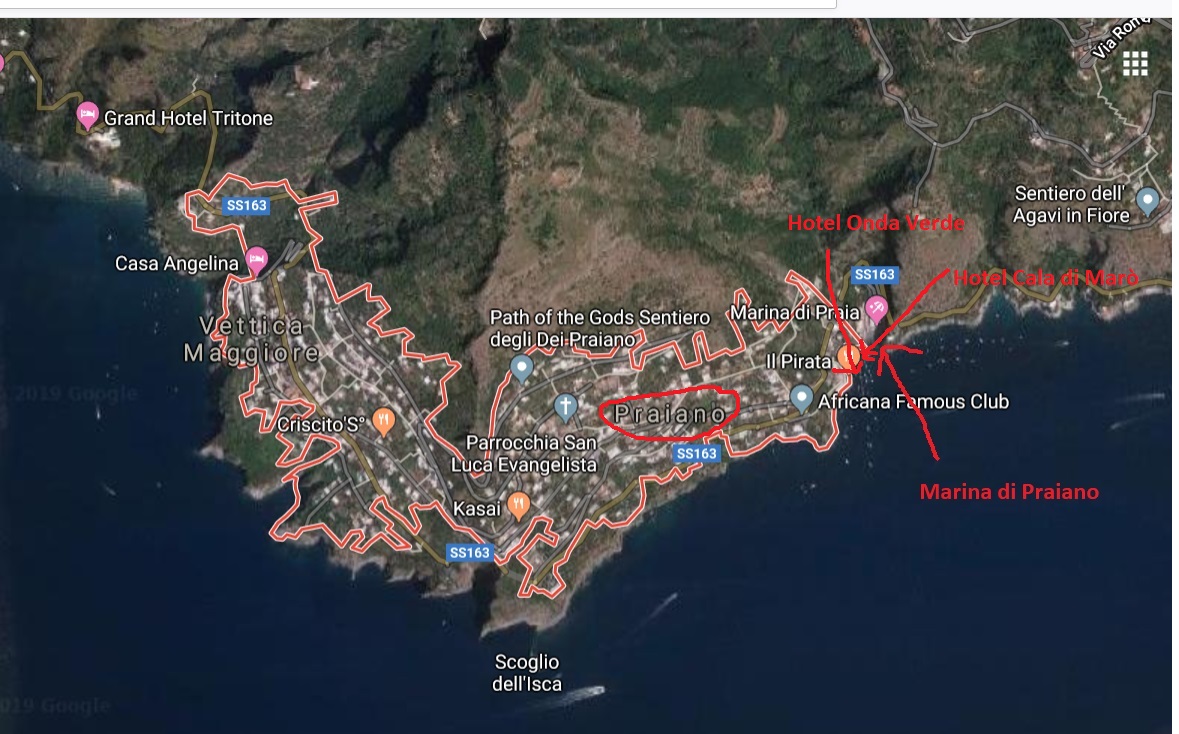
Marina di Praia — the beach area, at the bottom of a narrow ravine, reached by a steep staircase (or a small road for residents). It’s essentially a cove with a handful of restaurants, a beach club, and the entrance to the Africana club. Where you go to swim, eat by the water, and catch a boat tour.
The two are connected by the staircase and by the local bus that loops through town. Understanding this split makes navigation in Praiano much easier.
The Beaches
Marina di Praia — the main beach
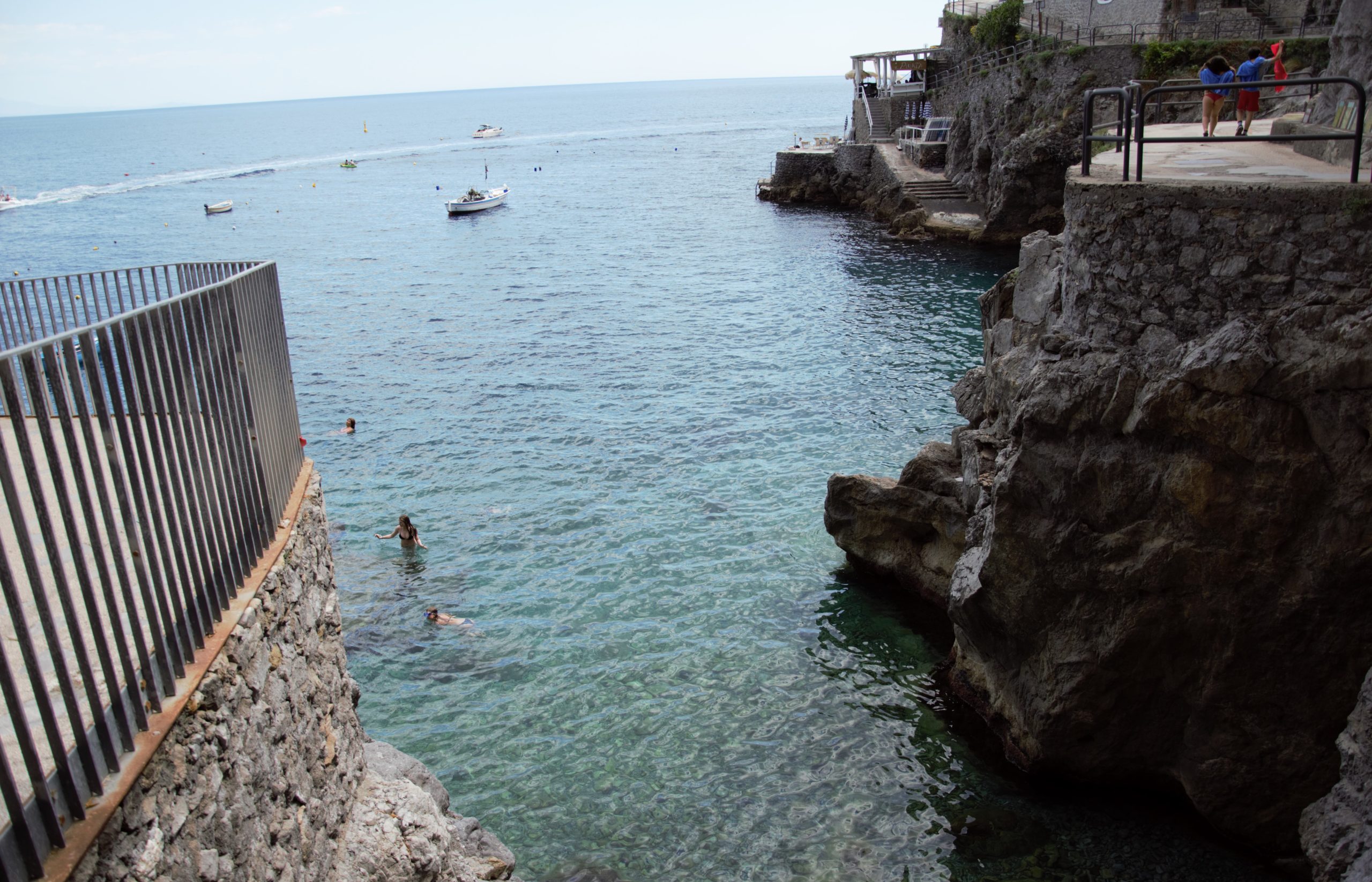
A small pebble beach at the bottom of the ravine between two high cliffs, with water that’s genuinely one of the clearest blues we’ve seen anywhere on the coast. It’s narrow, it fills up in July and August, and the sun leaves the beach mid-afternoon as the cliffs shade it — which is actually welcome in the heat of summer. The water is calm and ideal for swimming and snorkeling.
The beach has a handful of restaurants right on the water where you can eat with your feet practically in the sea. There are also boat tours departing directly from here — one of the advantages of Marina di Praia over most other Amalfi Coast towns is the direct sea access for excursions.
Getting there: On foot via the staircase from the main road (steep, allow 10 minutes), or by local shuttle bus. With luggage or children, the bus makes more sense. The descent is fine; it’s the return in summer heat that focuses the mind.
Cala della Gavitella — the sunset beach
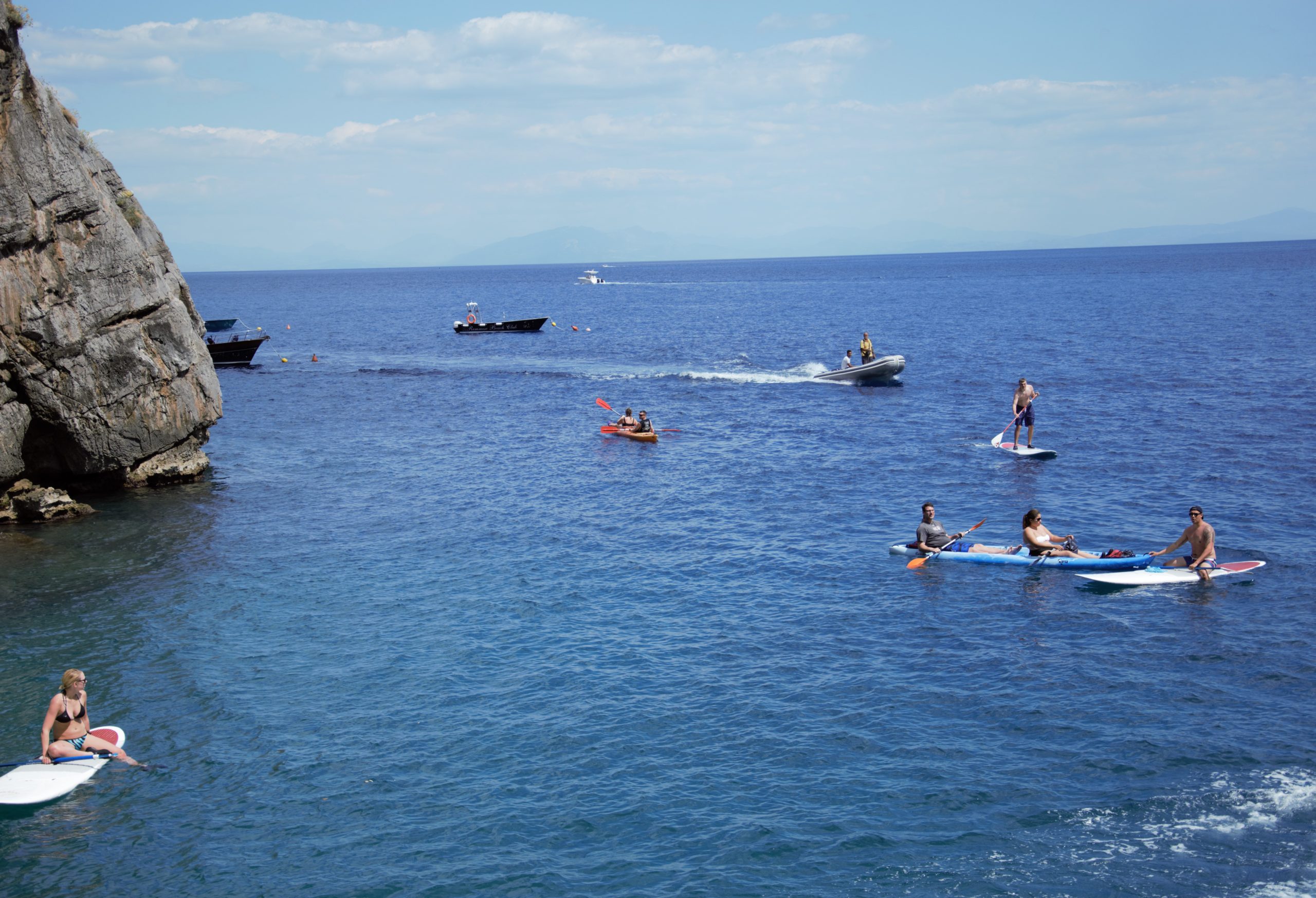
Our favorite beach in Praiano, and arguably the best beach for sunsets on the entire Amalfi Coast. Accessible by a staircase of around 300 steps from the village (or by boat from Marina di Praia), Gavitella faces directly west and catches sun until the very last moment of the day. The view from the beach includes Positano, Capri, and the Li Galli archipelago — the three-island cluster that, according to Homer, is where the Sirens lived.
There’s a beach club with sunbeds, umbrellas, and a restaurant (Lido One Fire, very good). The beach itself is small — pebbles and rock ledges arranged beneath a cliff with an old Saracen watchtower at the top. When the sea is calm, there are rock platforms perfect for jumping. In mid-afternoon, when the shade from the cliff reaches Marina di Praia and people start looking for sun, Gavitella still has hours of light left.
The 300-step descent is not a metaphor. It’s steep, it’s real, and going up in July is a genuine workout. Worth it every single time.
The Coastal Balcony Walk
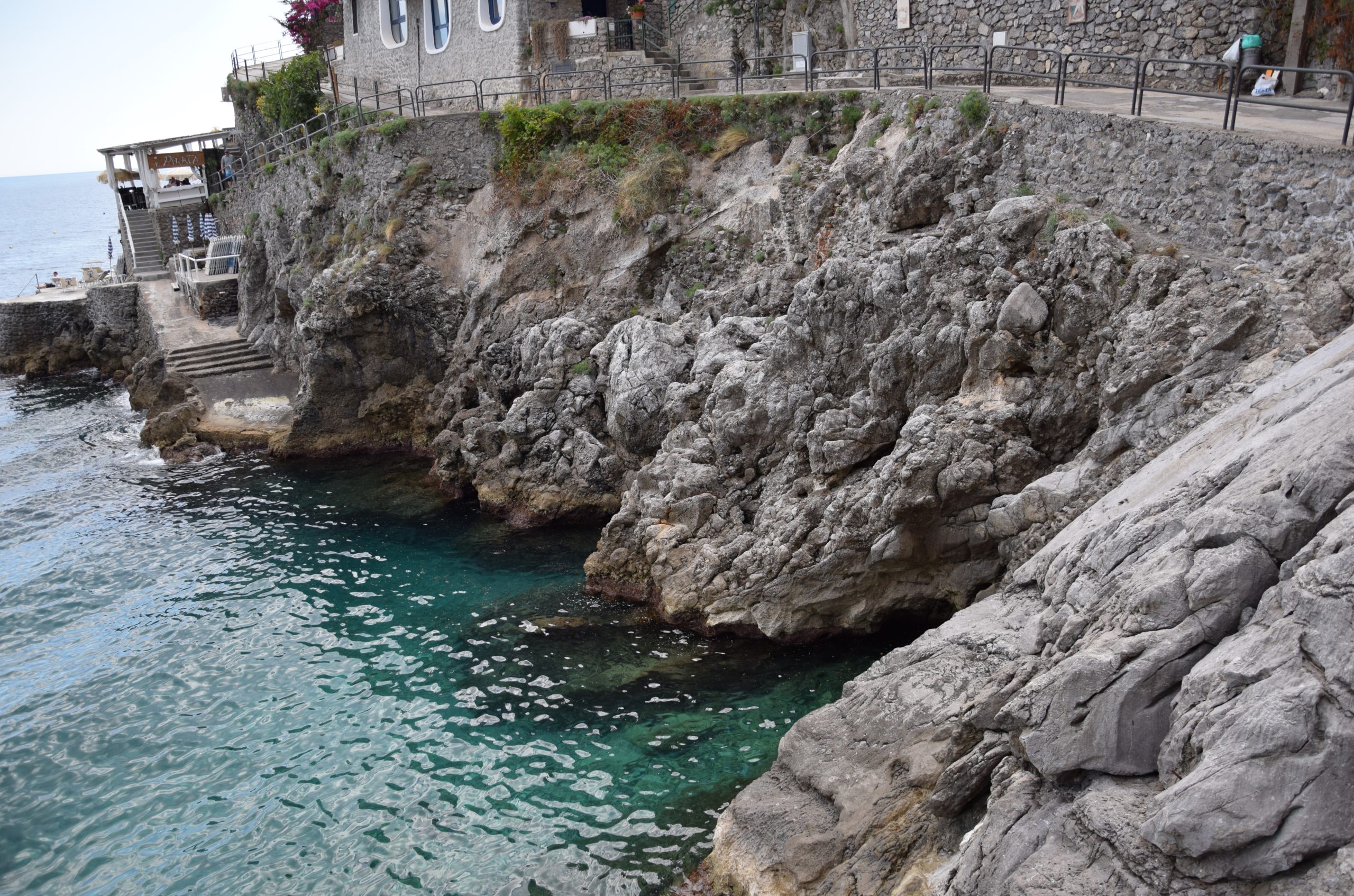
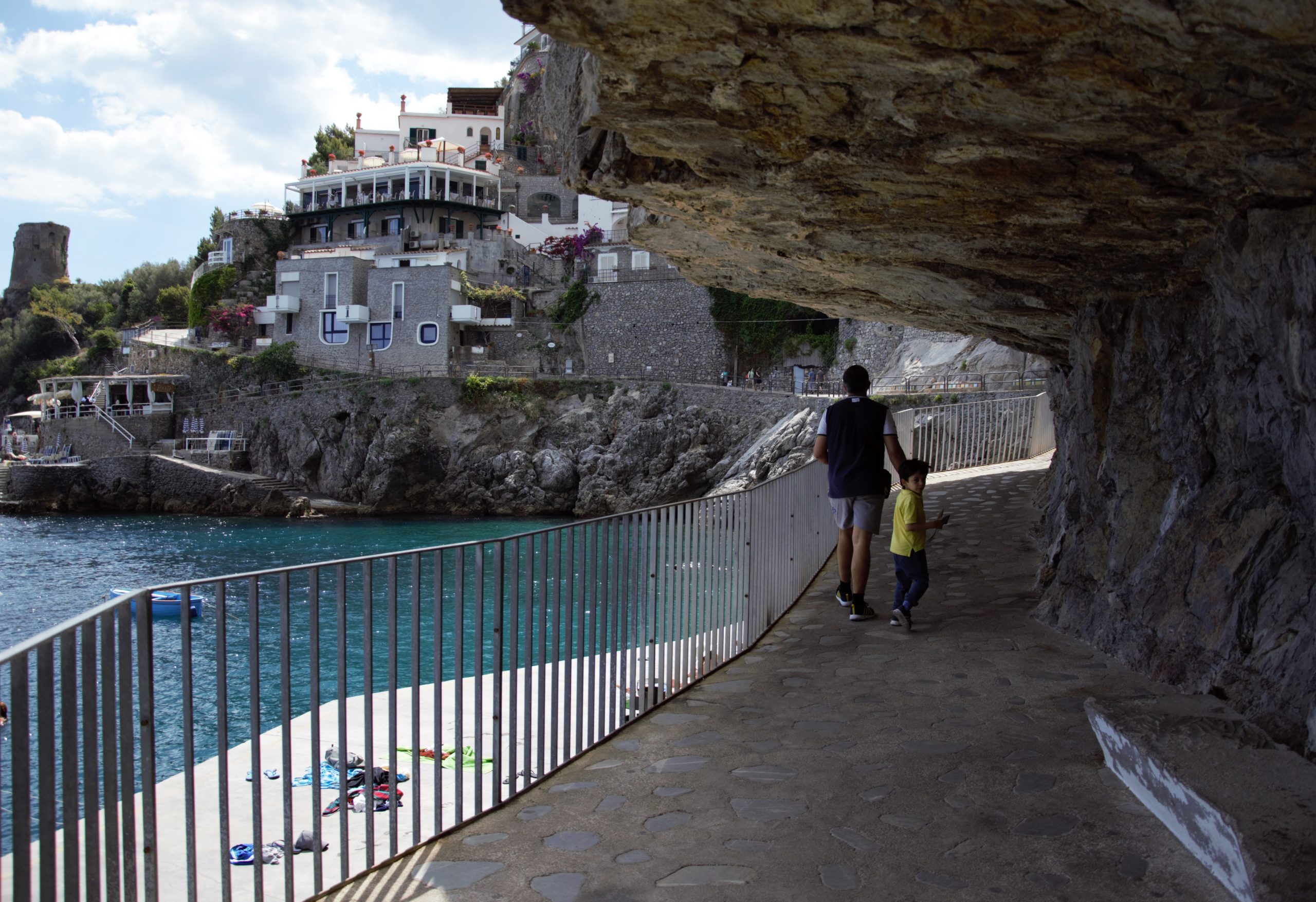
One of the things that makes Praiano’s beaches special is the walking path that follows the cliff face just above the sea level, connecting the beach area to rocky platforms and swimming spots that you can’t reach from land without it. The path was carved into the cliff — in some sections it’s barely wide enough for one person — and leads to spots where you can climb down to the water, dive from rock ledges, or simply sit above the sea with nobody around.
We’ve walked this path with both kids and found it manageable — the sections that require a bit of balance have railings, and the swimming spots at the end are exceptionally clean and calm. Early morning, before anyone else is awake, this walk is one of the quieter experiences you can have on the Amalfi Coast.
What to See in the Village
Church of San Gennaro (Vettica Maggiore)
The most visible landmark in Praiano, recognizable from the sea by its majolica-tiled dome in yellow and green — the same colors as the Positano church, reflecting the same deep-rooted ceramic tradition of the Amalfi Coast. The interior floor is entirely covered in hand-painted ceramic tiles, which is what strikes most people who take the time to go inside. It’s free, usually open during daylight hours, and almost always empty of tourists. Simple and beautiful.
Church of San Luca Evangelista
The older of Praiano’s two main churches, in the Marina di Praia area. Smaller, more austere, connected to the village’s fishing history. Worth a look if you’re passing through the lower part of town.
Via Masa — the Fishermen’s Path
A narrow lane in Vettica Maggiore lined with ceramic tiles depicting sea creatures — octopus, squid, fish, anchors — as a tribute to Praiano’s fishing tradition. It leads down to La Gavitella beach. We always walk it going down to the beach; the ceramic work is genuinely good and the lane is one of those Amalfi Coast details that makes you stop to photograph things you weren’t expecting.
The Saracen Watchtower (Torre a Mare)
The medieval watchtower above Gavitella beach was built to warn the town of approaching Saracen pirates — the same defensive system you find all along the coast from Positano to Salerno. It’s not open to visit inside, but it’s visible from the beach below and from the road above, and part of what gives Praiano’s cliff its particular silhouette. We’ve photographed it at sunset with the sea behind it dozens of times.
Tours and Boat Excursions
Marina di Praia is one of the better departure points for boat excursions on the coast precisely because it’s less crowded than the Positano and Amalfi piers. Several operators work directly from the beach. Private boat hire can be arranged on the spot outside of peak season; in July and August, book ahead.
From Praiano by boat you can reach: the Fjord of Furore (10 minutes, one of the most dramatic spots on the coast), the Emerald Grotto near Conca dei Marini, the beaches between Positano and Praiano accessible only by sea, and on a longer day-trip, Capri. We’ve done the Furore fjord by boat from Praiano and it’s spectacular — the approach from the sea is completely different from the view from the bridge on the road above.
⛵ Boat tours, snorkeling, and excursions from Praiano and the surrounding coast:
👉 Browse tours and activities on GetYourGuide
The Africana Famous Club
One of the most unusual nightlife spots on the entire Amalfi Coast: a club built directly into a sea cave below the Praiano cliffs, with a glass floor over the water so you can see the sea underneath while you dance. It’s been running since the 1960s and has hosted everyone from Jackie Kennedy to Sophia Loren over the decades. Open in summer (typically June through September), on evenings and weekends. Not our regular kind of thing, but genuinely worth seeing once for the sheer strangeness of the setting.
Access is from Marina di Praia — look for the signs from the beach. Dress code applies; it’s smarter than you’d expect for a cave.
Where to Eat in Praiano
Praiano’s restaurant scene is smaller than Positano or Amalfi, but more honest. Fewer tourist-trap menus, more places where locals actually eat.
At Marina di Praia: The restaurants right on the water are the main event — you eat with the sound of the sea, the cliff walls on both sides, and boats coming in and out. The fish is excellent because the boats that caught it are tied up 30 meters away. Prices are high for the setting but reasonable compared to equivalent views in Positano.
In the village (Vettica Maggiore): The bars and restaurants on the main road offer sea views from terraces above the cliff — the light in the afternoon and evening is extraordinary. Café Mirante on Via Masa is the locals’ bar of choice for breakfast and aperitivo. Ask locally for the current best trattoria — Praiano is small enough that recommendations travel by word of mouth.
What to order: Same as everywhere on the coast — scialatielli with seafood, fresh grilled fish, anything with the local anchovies or colatura (the anchovy sauce from nearby Cetara). And the delizia al limone from a proper pasticceria, not a tourist shop.
Where to Stay in Praiano
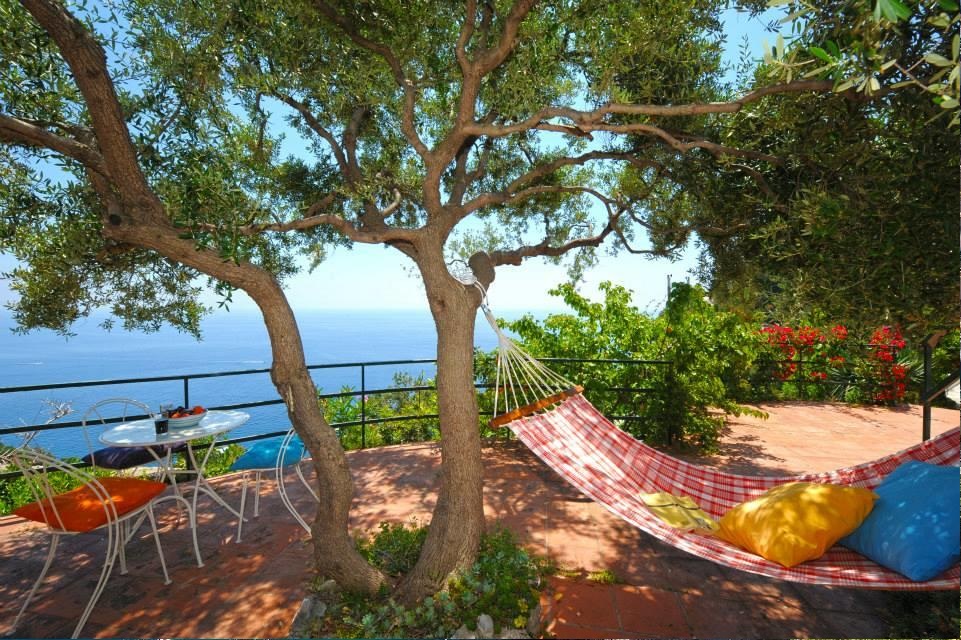
Praiano’s accommodation ranges from genuine luxury (Casa Angelina is one of the best boutique hotels on the entire coast) to simple family-run B&Bs at prices that would be impossible in Positano. The key variable, as everywhere on the Amalfi Coast, is how many steps from the road and from the beach. Check before you book.
🏨 Browse all accommodation in Praiano:
👉 See all hotels and apartments in Praiano on Booking.com
Getting to Praiano
By SITA bus (year-round)
The SITA bus runs along the SS163 and stops in Praiano in both directions — toward Positano/Sorrento and toward Amalfi/Salerno. A single ticket costs around €2–3. In summer the buses are packed; travel light and be patient. The main bus stop is on the SS163 at the top of town; from there, most accommodation and the beach require a walk downhill (and a corresponding walk back up).
By car or motorcycle
Praiano is 15 minutes from Positano and 25 minutes from Amalfi on the SS163. Parking is extremely limited — there’s a small paid area near the main road, and some accommodation includes private parking (worth prioritizing if you’re driving). On a motorcycle, the road between Positano and Praiano is one of the most satisfying stretches on the coast: cornices, tunnels, sea views, tight bends.
Important: Do not park on the SS163 itself, even briefly. We learned this the hard way — traffic wardens on this stretch are active and the fines arrive reliably. Use designated parking areas.
By ferry (April–October)
Praiano doesn’t have its own ferry pier, but Positano (15 minutes west) and Amalfi (25 minutes east) both do. From either port you can take the bus or a taxi to Praiano. If you’re arriving from Salerno or Naples by ferry for the first time, Amalfi is the more convenient connection point.
From Naples or the airport
By car: about 60–75 minutes in good traffic via the A3 motorway and the SS163. By public transport: train to Salerno (30–40 minutes), then SITA bus along the coast to Praiano (about 75 minutes). Private transfers from Naples Airport directly to Praiano are available and make sense if you have luggage and don’t want to deal with bus connections.
🚗 Book a private transfer from Naples Airport to Praiano:
👉 Browse transfers on GetYourGuide
Practical Tips for Praiano
The stairs are real. Like every Amalfi Coast town, Praiano is built on a cliff. The staircase down to Marina di Praia is steep and long. The 300 steps to Gavitella beach are steeper. Pack shoes you can actually walk in, and when you first arrive, check exactly how many steps your accommodation is from the road. We know people who booked a “convenient” guesthouse in Praiano and discovered it was 200 steps from the nearest bus stop.
The local bus is your friend. Praiano runs a small internal shuttle that connects the main road to the lower neighborhoods and the beach area. Ask your accommodation about the current schedule — it changes seasonally. It’s free or costs a few cents, and it saves significant knee-wear over a stay of several days.
Water shoes for the beach. Praiano’s beaches are pebble and rock. Beautiful, clean, but hard on bare feet. Water shoes make the entry and exit far more comfortable, especially with children.
Best time to visit Gavitella: Late afternoon, 4–6pm. The sun hits the beach until the very end of the day, the crowds have thinned from the morning rush, and you get the sunset view over the sea with Capri silhouetted in the distance. This is the Praiano experience in concentrated form.
Staying here as a base: Praiano works exceptionally well as a base for exploring the western Amalfi Coast. You’re 15 minutes from Positano by bus, 25 from Amalfi, and the Fjord of Furore is essentially next door. In the morning you can visit a busy town; in the evening you come back to somewhere quiet and affordable. Many people who’ve done both say Praiano was the better decision.
We’ve visited Praiano many times — on the motorcycle, with the kids, and for extended stays. It’s one of the towns we keep recommending to people who ask where to really stay on the coast, as opposed to where the famous photos are taken. All photos on this page are our own. Questions? Leave a comment below.