
Quick answer: Capri is genuinely one of the most beautiful places in Italy — and one of the most expensive, most crowded, and most logistically demanding. A day trip from the Amalfi Coast is entirely doable and what most people do. Staying overnight unlocks the island the crowds never see. Either way: go early, book ahead, and don’t base your entire visit around the Blue Grotto — it closes regularly due to sea conditions.
We’ve been to Capri more times than we can count — by ferry from Positano, from Amalfi, from Salerno. We’ve gone for a long lunch and come back on the evening boat. We’ve stayed two nights when the timing was right. We’ve taken the kids, we’ve gone as a couple at the end of October when most of the tourists were gone and the island belonged to itself again.
Capri is one of those places that fully earns its reputation, which is rare. The Faraglioni rock stacks rising from the sea, the piazzetta at dusk, the way the limestone cliffs catch the light in the afternoon — it’s as beautiful as every photo suggests, and something in the quality of the air and light there is genuinely difficult to reproduce anywhere else. It’s also genuinely overcrowded in July and August, genuinely expensive at all times, and genuinely requires planning if you want to do it right.
Here’s what we know from many visits.
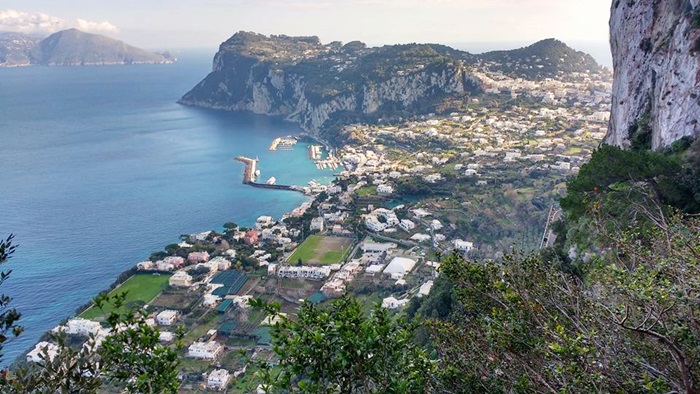
Getting to Capri from the Amalfi Coast
Capri is accessible by ferry or hydrofoil from several points on and around the Amalfi Coast. All services run April through October; in winter, connections are reduced and less reliable.
From Positano: Ferry to Capri takes about 50–60 minutes. Summer service runs multiple times daily. This is the most scenic departure if you’re based on the western coast — the Faraglioni appear on the horizon as you approach.
From Amalfi: About 80 minutes by ferry. Also good connections, fewer services than from Sorrento but very convenient if Amalfi is your base.
From Sorrento: The fastest connection — about 20–25 minutes by hydrofoil, 40 minutes by regular ferry. If you’re flexible about where you board, Sorrento is almost always the most frequent and reliable option.
From Salerno: About 80–90 minutes. Less frequent than from Sorrento but available in summer and useful if you’re based on the eastern coast.
From Naples: About 60–80 minutes by hydrofoil. Good option if you’re arriving to the region via Naples airport and want to visit Capri before settling on the Amalfi Coast.
Our advice: Take the first available morning boat — 8am or 8:30am departures exist in peak season. Being on Capri before the mid-morning wave of day-trippers changes everything. The piazzetta at 9am versus the piazzetta at 11am are different places entirely.
⛴️ Day trips to Capri from the Amalfi Coast — including guided tours with transport, boat trips around the island, and Blue Grotto entry:
👉 Browse Capri tours and day trips on GetYourGuide
What to See in Capri Town
Piazza Umberto I — La Piazzetta
The social heart of the island, known universally as the Piazzetta. Four small streets meet here, surrounded by cafes and the church of Santo Stefano, with a view over the harbor and the sea beyond. In the morning it’s peaceful. By midday in summer it’s one of the most densely populated small squares in Italy. At sunset, when the day-trippers have left and the island’s guests have it to themselves, it’s genuinely one of the most beautiful evening settings in the Mediterranean.
Coffee at a Piazzetta cafe costs €5–8 — you’re paying for the view and the experience. Do it once. The locals have their coffee standing at the bar for €1.50 in the streets behind.
The Faraglioni
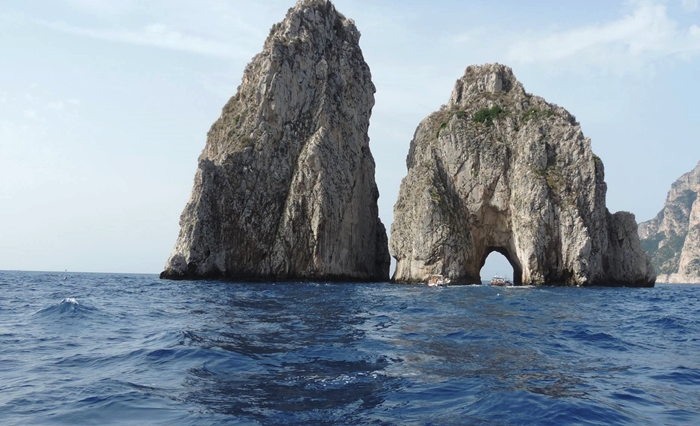
Three limestone sea stacks rising from the water off the eastern end of the island — the most photographed image of Capri and the symbol of the entire Bay of Naples. The largest is connected to the mainland of the island; the other two stand independent. One has a natural arch at sea level that small boats can pass through.
You can see the Faraglioni from the Gardens of Augustus (from above, the best viewpoint), from the Via Krupp below, or from the sea on a boat tour. All three views are worth experiencing. The boat passage through the arch — done on the island circumnavigation tours — is the most memorable.
Gardens of Augustus (Giardini di Augusto)
Terraced botanical gardens above the town center with the best land-based view of the Faraglioni. The gardens were laid out by Friedrich Alfred Krupp in the early 20th century and later donated to the municipality. From the upper terrace you look directly down on the famous Via Krupp — the spectacular switchback path cut into the cliff face — with the Faraglioni beyond and Marina Piccola below.
Admission is around €3–5. It’s small, beautiful, and often overlooked by people who’ve come primarily for the Blue Grotto and the beaches. We always go. The view of the Faraglioni from here at mid-afternoon light is exceptional.
Via Krupp
The zigzag path cut into the cliff below the Gardens of Augustus, connecting Capri town to Marina Piccola, was commissioned by Friedrich Krupp in 1902. It’s been closed and reopened periodically due to rockfall risk — check locally whether it’s accessible during your visit. When open, the walk down is extraordinary: tight switchbacks above the sea, with the Faraglioni appearing from new angles at every turn.
Villa Jovis
The ruins of the largest of Emperor Tiberius’s twelve villas on Capri, built between 27 and 37 AD on the northeastern tip of the island. The walk from Capri town takes about 45 minutes each way on a relatively flat path through the upper village. The ruins themselves are extensive — you can see the layout of the imperial complex, the cisterns, the baths, the servants’ quarters — and the views from the cliff edge at the far end are some of the best on the island.
Most day-trippers skip it because it requires time and walking. That’s exactly why it’s worth going. We’ve been twice and had the complex largely to ourselves both times.
Anacapri — the Quieter Half of the Island
The island has two municipalities: Capri town in the east and Anacapri on the higher plateau in the west. They’re connected by a winding bus road (mini-buses run constantly from the main square) or by the ancient Scala Fenicia — over 900 steps carved from the rock in the 6th century BC, leading from near Marina Grande up to Anacapri. We’ve walked down the Scala Fenicia; walking up is a different commitment entirely.
Anacapri is quieter, less polished, and in some ways more authentically Caprian than Capri town. Most day-trippers spend their time in the piazzetta and on the famous shopping streets; Anacapri catches fewer of them.
Villa San Michele
The former home of Swedish physician and author Axel Munthe, built on the site of an ancient Roman villa in the early 20th century. The house is now a museum with furnishings, antiques, and Roman artifacts, but the real draw is the garden: a long pergola walk leading to a sphinx viewpoint that looks north over Marina Grande and the Sorrentine Peninsula. The view on a clear morning is extraordinary — you can see all the way to Vesuvius.
One of the best-value things to do on Capri. Admission around €10. Consistently beautiful regardless of season.
Monte Solaro — the best view on the island
At 589 meters, Monte Solaro is the highest point on Capri. A single-seat chairlift from Anacapri’s Piazza Vittoria reaches the summit in about 13 minutes, floating over lemon groves, terraced gardens, and limestone ridges. At the top: a 360° panorama covering the entire island, the Bay of Naples, Vesuvius, the Sorrentine Peninsula, Ischia, the Amalfi Coast, and on very clear days, the mountains of Calabria far to the south.
Chairlift cost: around €14 round-trip (as of 2026). Operating hours vary by season; check locally. We’ve been up in summer (spectacular but hazy) and in October (often clearer, and the light is extraordinary). If you only have one day and have to choose between the Blue Grotto and Monte Solaro, we’d honestly take Monte Solaro — it never closes, it never has a queue problem, and the view is more consistently impressive.
Chiesa di San Michele
An 18th-century church in Anacapri’s main square with an extraordinary majolica tile floor depicting the expulsion from Paradise — 2,500 hand-painted tiles covering the entire floor. You view it from a gallery above. It’s small, it takes 15 minutes, and it’s one of those things that makes you stop and look far longer than you planned. Admission around €3.
The Blue Grotto (Grotta Azzurra) — the Honest Assessment
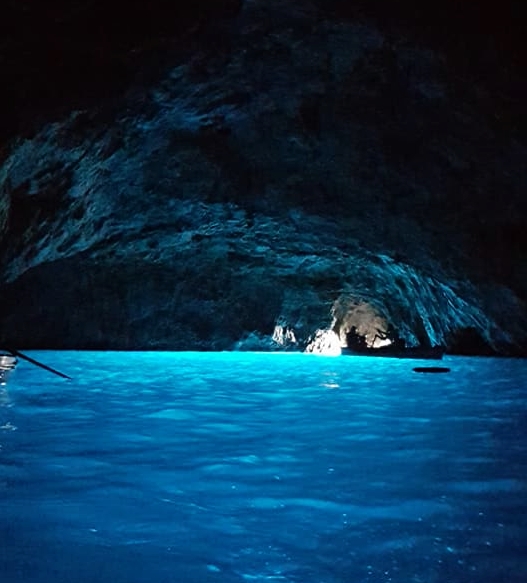
The Blue Grotto is genuinely extraordinary. The water inside really is that electric, luminous blue — caused by sunlight entering through an underwater opening and refracting upward through the sea. No photo preparation, no tricks. We’ve seen many famous “natural wonders” that disappoint in person. The Blue Grotto doesn’t.
That said, the experience requires managing expectations carefully.
The five-minute visit. You lie flat in a tiny wooden rowboat, the boatman pulls you through the narrow entrance using a chain on the cave wall, and you’re inside for approximately five minutes while he rows you around singing. Then you exit. That’s the experience. €18 per person entrance fee, plus whatever you paid to get to the grotto by boat or bus. It’s a lot of money for five minutes of extraordinary blue light — but most people who’ve done it say it’s worth it. We agree.
It closes constantly. Any sea state above very calm closes the grotto — the entrance is only about 1 meter high above the waterline, and even moderate swells make entry impossible. It can be closed for days at a time in bad weather, or unexpectedly on any given morning. If the grotto is the singular goal of your Capri visit, you’re taking a genuine risk. Have a backup plan.
The queue problem. In peak season, waiting times at the grotto entrance can reach 1–2 hours. The most crowded window is 10am–2pm when tour boats from the mainland arrive. Two strategies work: arrive by bus from Anacapri at opening time (around 9am, before the boat tours arrive), or come by bus around 3pm when the main tour boats have departed. The bus from Anacapri is also cheaper than arriving by boat from Marina Grande.
Best light: Technically noon to 2pm gives the most intense blue — the sun is directly overhead and the refraction is strongest. But this is also the worst time for crowds. Our compromise: aim for 10–10:30am via bus from Anacapri, which catches the morning light before the worst of the crowd.
Blue Grotto — Costs and Access
Entrance fee: €18 per person (rowboat, mandatory)
By boat from Marina Grande: €20–25 transfer + €18 entrance
By bus from Anacapri (cheapest): €2.20 bus + €18 entrance
Hours: 9:00am to 1 hour before sunset, weather permitting
Closed: rough seas, high winds, Christmas Day, New Year’s Day
Always check status on the morning of your visit — ask at your hotel or at Marina Grande
Going Around the Island by Boat
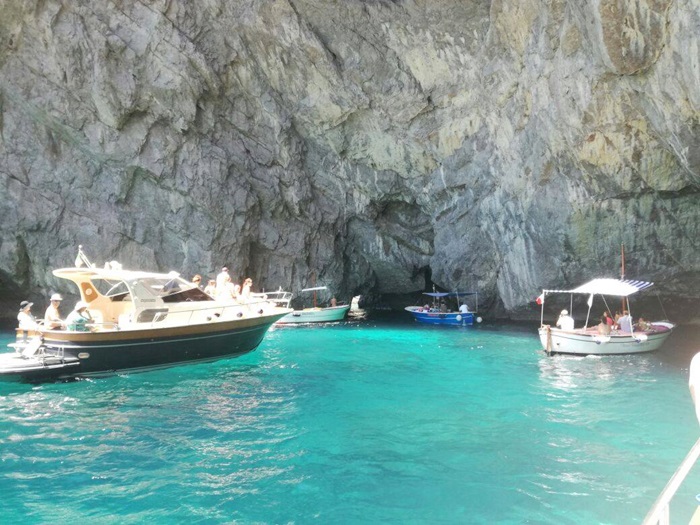
If you do one thing in Capri, make it this: a circumnavigation of the island by boat. Capri looks completely different from the sea than from land. The limestone cliffs, the sea caves, the natural arches, the Faraglioni passage, the White Grotto and Green Grotto (both free to enter, unlike the Blue Grotto, and in our opinion equally beautiful in different ways) — none of this is visible from the roads and paths above.
The standard island tour takes about 1.5–2 hours and leaves from Marina Grande. Shared small-group tours cost around €20–25 per person. Private boat hire for the day starts at around €300–400 for a traditional gozzo with skipper, which is excellent value if you have a group of four to six people and want to stop wherever you like for swimming.
A tip about “island tour + Blue Grotto” packages: Most tours that advertise both often skip the grotto because the wait time makes it impossible to complete the island circumnavigation in the allotted time. If the Blue Grotto is your priority, book a direct transfer to the grotto only, not a combined island tour that includes it.
⛵ Book a boat tour around Capri — island circumnavigation, Blue Grotto entry, private boat hire, and day trips from the Amalfi Coast.
👉 Browse Capri boat tours on GetYourGuide
Getting Around the Island
Capri has no regular private cars — the island is too small and the roads too narrow. Transport options are:
Funicular: From Marina Grande up to Capri town — about a 5-minute ride, runs constantly in season. The most convenient arrival option if you’re heading to the piazzetta.
Mini-buses: The island’s bus system connects Marina Grande, Capri town, and Anacapri. Frequent, cheap (around €2 per ride), and the main way to get between the two towns. Buses to Anacapri leave from the main square in Capri town.
Taxis: Open convertible taxis unique to Capri — part of the island’s character. Expensive (around €15–30 for short trips) but genuinely charming. Worth taking once for the experience.
On foot: The best way once you’re in the town centers. Capri town is compact and walkable; Anacapri spreads a bit further but is still manageable on foot. The path to Villa Jovis, the Pizzolungo trail, and the route to the Arco Naturale are all accessible without any transport.
Scooter rental: Available at Marina Grande for those who want to explore the island independently. Fun in shoulder season, busy and occasionally hairy in summer peak — the roads are narrow and tour buses don’t slow down.
Where to Eat in Capri
Capri is expensive. This is not negotiable. A pasta dish in the piazzetta area costs €20–30. A full dinner for two at a mid-range restaurant runs €80–120. Beach club lunches at La Fontelina or Da Luigi ai Faraglioni cost €50+ per person.
What to order regardless of price:
Torta caprese — the island’s signature dessert, a flourless chocolate and almond cake. The legend says it was invented by mistake in the 1920s by a chef who forgot to add flour to a cake for American gangsters; the almond-chocolate result was so good it became famous. Every pasticceria on the island makes it. Try it. It’s genuinely better here than anywhere else because the almonds are local.
Insalata caprese — yes, it’s named after the island. Buffalo mozzarella, local tomatoes, basil, olive oil. Simple, seasonal, extraordinary when done right with local ingredients.
Fresh fish: Capri has its own small fishing fleet. Any catch-of-the-day served simply — grilled with olive oil and lemon, or acqua pazza — is excellent.
Da Paolino in the lemon grove below Capri town is one of the most beautiful restaurant settings in Italy — long tables under an ancient lemon grove, candles, the smell of the lemons, excellent food. Book weeks ahead in July and August. Worth every effort.
Budget tip: The bars and alimentari on the back streets of Anacapri charge half the piazzetta prices. A proper lunch there — panino, water, coffee — costs €12–15. The quality is the same; only the view differs.
Where to Stay in Capri
Staying overnight in Capri means experiencing a genuinely different island. After the last ferries leave in the evening, the piazzetta empties to a fraction of its daytime crowd. The lanes are quiet. The air is warm. The sound of the sea carries from the cliffs. It’s one of the better experiences available in southern Italy and it doesn’t require staying at a luxury hotel — even a modest guesthouse gives you access to that evening island.
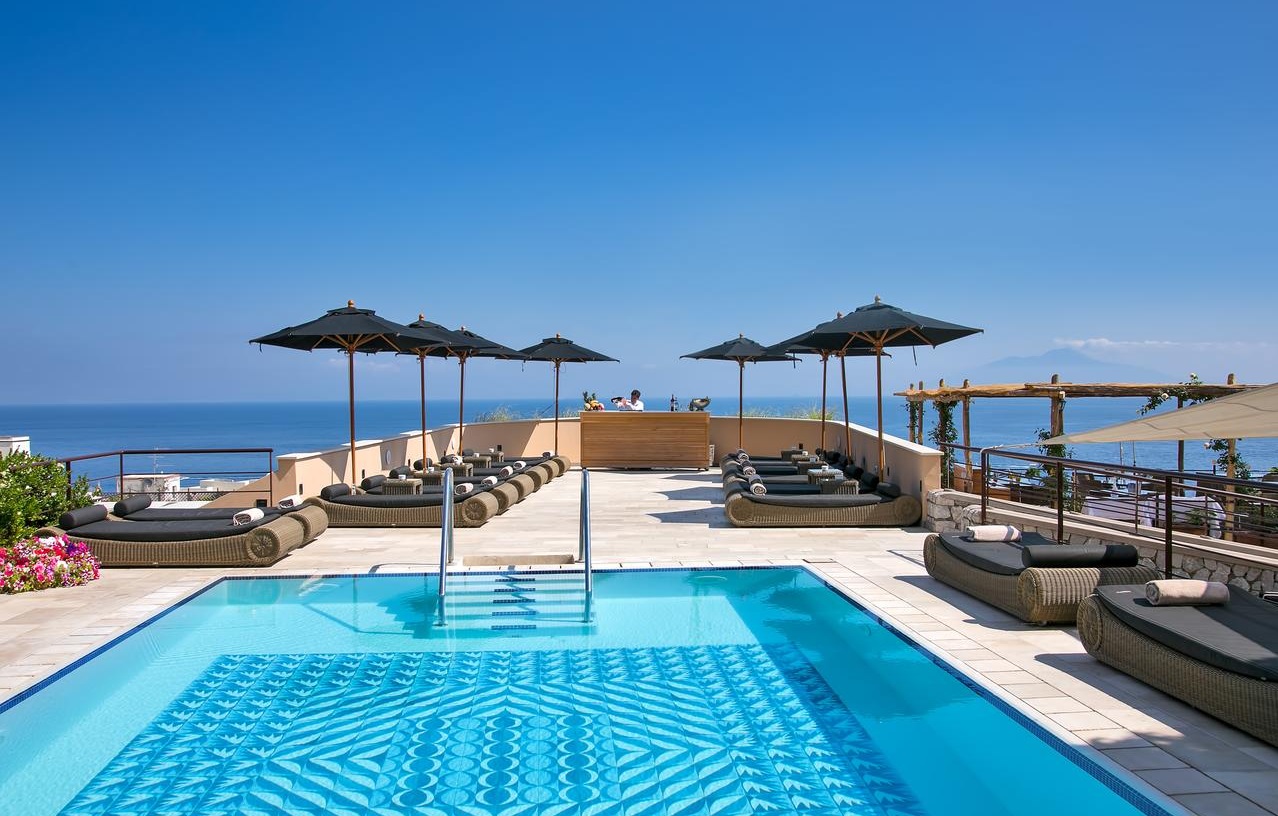
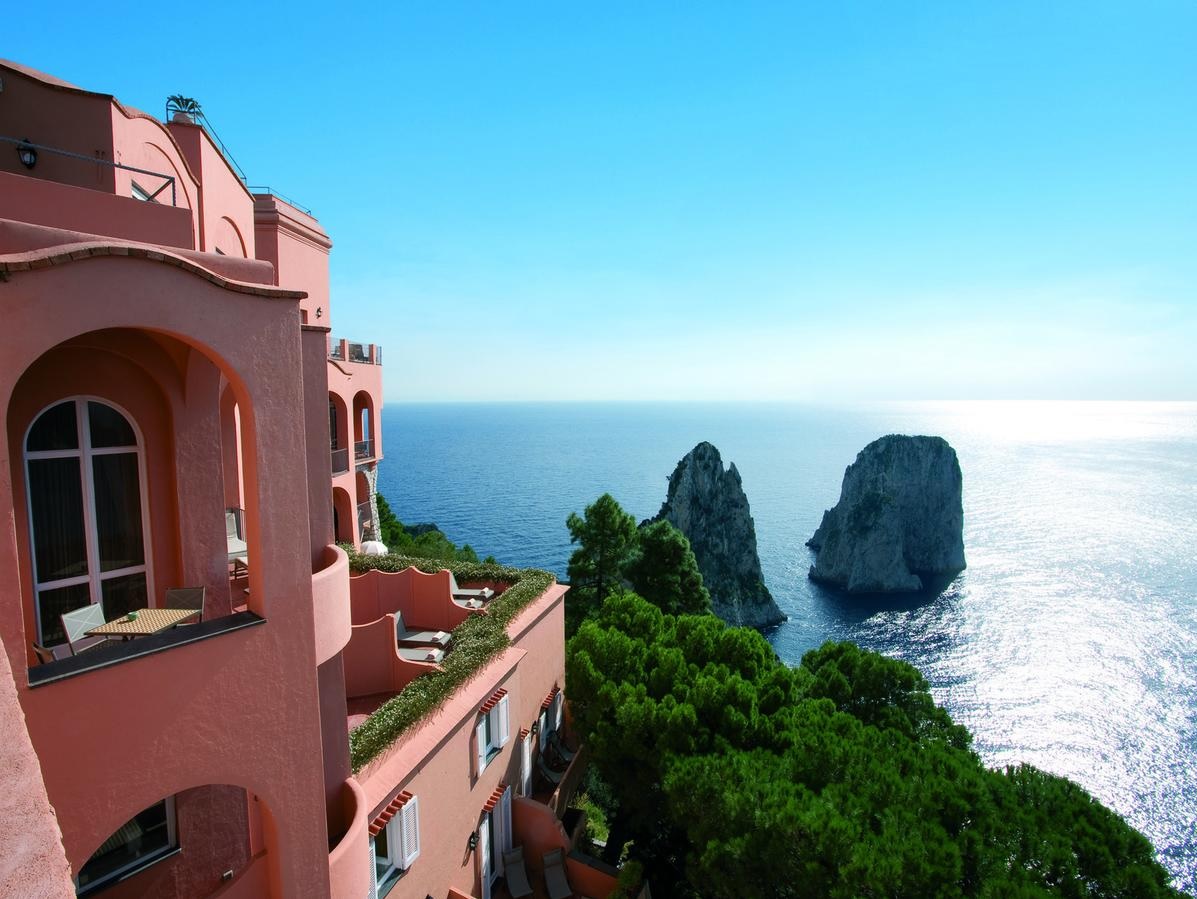
🏨 Browse all hotels in Capri across all budgets: From 5-star cliffside estates to charming B&Bs in Anacapri well below the luxury price point.
👉 See all Capri accommodation on Booking.com
Day Trip or Overnight?
Day trip: Perfectly doable from anywhere on the Amalfi Coast. Take the morning ferry, see the piazzetta, do the boat tour or the Blue Grotto, have lunch, return in the afternoon. You’ll see Capri and understand why it’s famous. Plan for 6–8 hours on the island minimum.
One night: Completely different experience. The evening island — quiet lanes, the piazzetta at sunset, dinner without rushing to catch the last ferry — is the version that makes people come back.
Two nights: Ideal. Day one: Capri town, boat tour, Faraglioni, Gardens of Augustus, Villa Jovis. Day two: Anacapri, Monte Solaro, Blue Grotto, Villa San Michele. You’ll feel like you know the island rather than having visited it.
Practical Tips — What We’ve Learned
Take the first boat of the day. This cannot be overstated. Capri at 9am and Capri at 11am are different places. If you’re doing a day trip, take the earliest ferry available.
Don’t plan your entire visit around the Blue Grotto. It closes. If it’s closed when you arrive, have a Plan B. The island circumnavigation by boat, the Green and White grottos (both free and beautiful), Monte Solaro — these are all excellent alternatives that don’t close due to weather.
Get up to Anacapri. Most day-trippers stay in the piazzetta area and never take the bus to Anacapri. That’s where the real island is.
Book restaurants ahead in summer. Da Paolino, Il Riccio, and any restaurant with a view books out weeks in advance in July and August. If dinner matters, book before you arrive on the island.
Capri with kids: More manageable than you’d think. The funicular is a hit. The boat tour is a hit. Monte Solaro chairlift is a hit. The piazzetta has good gelato. The main challenge is heat in August — the island has limited shade outside of Anacapri’s garden areas. Come in June or September with children.
Shoes. The lanes of Capri town are stone-paved and sloped. Beautiful, Instagram-perfect, and completely impractical in heels or thin-soled sandals. Wear something you can walk in. You will walk a lot.
We’ve visited Capri many times over 15 years of exploring this part of Italy. All photos on this page are our own. Questions about planning your visit? Leave a comment below.