
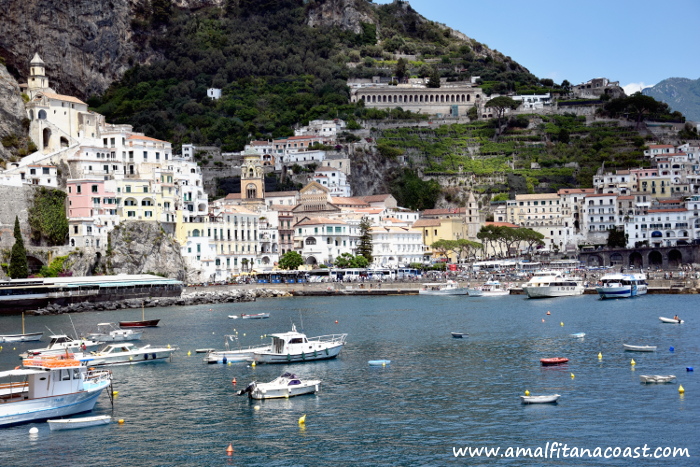
Last updated: June 2026 · Reading time: 14 min
Quick answer: Amalfi town is the best base on the coast — central, well-connected by ferry and bus, and with enough to keep you busy for two full days. It’s not as dramatic as Positano on Instagram, but it’s infinitely more practical. And once the day-trippers clear out in the afternoon, it’s genuinely magical.
We’ve driven into Amalfi on a motorcycle more times than we can count. We’ve arrived by ferry from Salerno with two kids and a bag that was already too heavy. We’ve walked the back alleys at 7am when the only people awake were fishermen and a barista who recognized us from the year before. We’ve also been stuck in traffic on the SS163 for two hours trying to get out, which is why we now plan differently.
This is what we actually know about Amalfi — not what’s written on the official tourism pages.
Why Amalfi Town is Worth More Than a Day Trip
Most people treat Amalfi as a stop: ferry in, cathedral photo, limoncello, ferry out. That’s a shame, because the town that was once one of Italy’s four great Maritime Republics — alongside Venice, Genoa, and Pisa — deserves more than two hours between boats.
At its peak in the 11th century, Amalfi controlled trade routes across the Mediterranean, minted its own currency (the tari), and wrote the Tavole Amalfitane — a maritime code that governed seafaring law across Europe for centuries. You can feel traces of that ambition in the scale of the Cathedral, in the narrow lanes that once hummed with merchants and sailors, in the paper mills that made Amalfi rich. For a town of 5,000 people, it carries an extraordinary amount of history.
Practically speaking, Amalfi is also the ferry hub of the coast. Boats to Positano, Salerno, Capri, and Sorrento all leave from here. The SITA bus stops here. The road east to Maiori and Cetara, and west toward Positano, both pass through. If you’re planning to explore multiple towns, Amalfi as your base saves time every single day.
What to See in Amalfi
1. The Cathedral (Duomo di Sant’Andrea) — but do it right
The Duomo is unmissable, but most people see it wrong: they photograph the staircase from below, walk up, peek inside, and leave. If you only do that, you’ve skipped the best parts.
The complex includes five distinct things worth visiting: the Cathedral itself, the older Basilica del Crocifisso (9th century, the oldest structure), the underground Crypt of St. Andrew, the Cloister of Paradise (Chiostro del Paradiso), and the Bell Tower. A single ticket (€3 adults, €1 for under-18s) gets you into all of them except the Cathedral nave, which is free.
Our honest tip: Go at opening time — 9am from March through September. The light on the façade in the morning is extraordinary, and you’ll have the staircase and the square almost to yourself before the tour groups arrive. By 11am on any summer day, Piazza Duomo is a wall of people.
One more thing most visitors miss: the Cathedral closes at 5pm sharp, but the rest of the complex closes earlier in winter. Check the current hours before you go.
Admission: €3 adults, €1 under-18 | Hours: 9:00–18:45 (Mar–Jun), 9:00–19:45 (Jul–Sep), 10:00–13:00 and 14:30–16:30 (Oct–Feb)
2. The Cloister of Paradise (Chiostro del Paradiso)
Part of the Cathedral complex but worth calling out separately because it’s one of the most quietly beautiful spaces on the entire coast. Built in 1266–68 as a cemetery for Amalfi’s noble families, it has interlaced Moorish arches, marble columns, and ancient sarcophagi — including a 4th-century Roman piece depicting Romulus and Remus.
In the center, a palm garden planted around 1908 creates a strange, dreamlike atmosphere: medieval arches framing something that looks half-Mediterranean, half-tropical. We’ve photographed it in every season. It looks completely different in each one.
3. The Paper Museum (Museo della Carta)
This one surprises people. Amalfi was making paper from the 13th century — some of the first in Europe outside the Arab world — and the old mills in the Valle dei Mulini (Valley of the Mills) just above town are where it happened. The museum is inside one of those original mills, with the original machinery still working.
Admission is around €7 per person, and they run demonstrations showing how the paper was made. If you have kids, this is genuinely engaging — our kids watched the whole demonstration without once asking to leave, which is not something we can say about most museums. The paper products on sale at the exit are also some of the nicest souvenirs you’ll find on the coast.
Location: Via delle Cartiere 24 | Worth it with kids: Yes, absolutely
4. The Back Streets and Valle dei Mulini
The tourist area of Amalfi is essentially one main street (Ruga Nova Mercatorum) leading up from the seafront to the Cathedral. Most visitors don’t go beyond that. The rest of the town — the tangle of alleys climbing uphill, the laundry strung between buildings, the small piazzas where locals actually eat — is almost completely empty of tourists even in August.
Walk uphill past the Paper Museum and keep going. The Valle dei Mulini, the old valley of the paper mills, is a 20-minute walk from the Cathedral. The path eventually leads to a ruined mill at the top, with a waterfall and terraces of lemon groves. It’s free, quiet, and completely different from the seafront chaos below.
5. Walk to Atrani (5 minutes, no exaggeration)
Atrani is technically a separate town — the smallest municipality in Italy by surface area — but it’s a five-minute walk along the coast road from Amalfi. Just follow the seafront east past the parking area and you’ll find yourself in a completely different atmosphere: fewer tourists, a small beach, a piazza with local restaurants, and prices noticeably lower than in Amalfi itself.
We often end up eating in Atrani when Amalfi feels too crowded. The food is just as good and you’ll spend 20–30% less on the same dishes. Worth knowing.
Tours and Excursions From Amalfi
The best thing about Amalfi’s position on the coast is that nearly every excursion you’d want to do leaves from the port. You don’t need a car for any of these.
Boat tours are the single most recommended thing we do with first-time visitors. The Amalfi Coast from the sea looks completely different from what you see on land — the cliffs, the sea caves, the towns stacked up the mountain. We’ve done it in summer with the kids and in early October with just the two of us, and it’s exceptional both times. The small-group tours that stop for swimming are particularly good.
👉 Book a boat tour or coastal excursion from Amalfi on GetYourGuide
Day trips to Positano by ferry (around 30 minutes, runs multiple times daily April–October) are the sensible alternative to driving. You arrive at the beach, walk the town, eat, and ferry back. No parking, no traffic, no stress. We’ve done this with two kids in tow and it was genuinely easy.
Day trips to Capri by hydrofoil (around 80 minutes from Amalfi) are absolutely worth a full day if the weather is clear. Buy tickets at the port — no need to book weeks ahead for the standard ferry, though hydrofoils can sell out in August.
Cooking classes in Amalfi are genuinely good — pasta, limoncello, fresh seafood — and one of the best activities if you’re here for more than one day or traveling with someone who isn’t as interested in churches and museums. Several operators run them in the town, and the quality is consistently high.
👉 Browse cooking classes and tours in Amalfi
The Beach in Amalfi — Honest Assessment
The main beach (Marina Grande) is small, pebbly, and extremely popular. In July and August, free space on the public part essentially doesn’t exist by 10am. Beach clubs rent sunbeds and umbrellas at around €15–25 per person depending on position — worth it if you want to spend the day, because at least you’re guaranteed a spot.
Better options within easy reach:
- Atrani beach (5-minute walk): smaller, slightly less crowded, free sections actually exist
- Santa Croce beach (accessible only by boat or a 30-minute hike): one of the most beautiful on the coast, completely worth the effort
- Castiglione di Ravello (below Ravello by bus or stairs): quiet, small, and almost nobody goes there because they don’t know it exists
If the beach is your priority, Maiori (20 minutes east by bus or car) has the longest sand beach on the coast and far more free space. We often drive or take the bus there for a beach day and return to Amalfi in the evening.
Where to Eat in Amalfi — What We Actually Order
The tourist restaurant trap in Amalfi is real. The places with menus in six languages and a host standing outside calling you in are almost universally mediocre. The rule we follow: if the menu has photos, keep walking.
What to eat:
- Scialatielli ai frutti di mare — the local pasta, thick and hand-rolled, with mixed seafood. This is the dish to order in Amalfi, not spaghetti alle vongole.
- Cuoppo di pesce fritto — fried mixed seafood in a paper cone, from any street food stand near the port. Cheap, excellent, genuinely local.
- Delizia al limone — the local lemon cream cake. From a proper pasticceria, not a tourist shop. The difference is enormous.
- Limoncello — yes, everywhere, but try to get artisanal. Ask if it’s made with Sfusato Amalfitano lemons (the local variety, protected designation of origin). The flavor is genuinely different from industrial versions.
Where we eat: The further uphill and further from the Cathedral, the better the value. The alleys above and behind the main street consistently have better food at lower prices than anything on the seafront. Ask any local where they eat — they don’t go to the waterfront restaurants.
The Legends of Amalfi (Worth Knowing)
Amalfi has a few legends that locals will tell you if you ask — and they’re genuinely good.
The founding legend: Hercules, son of Zeus, founded Amalfi as a tribute to his lover — a woman named Amalfi, with eyes the color of the sea. When she died, he buried her in the most beautiful place on earth. Whether you believe it or not, the sea really is that color.
The lovesick couple warning: According to local legend, if two people in love climb the steps of the Cathedral hand in hand, they’ll never get married. We’ve climbed those steps together multiple times. We can confirm the legend is not working as described.
The Amalfi and Paradise inscription: Somewhere in town there’s an inscription that reads: “Per gli amalfitani il giorno in cui andranno in Paradiso sarà un giorno come tutti gli altri: perché il Paradiso ce l’hanno già qui, a casa loro.” — “For the people of Amalfi, the day they go to Paradise will be a day like any other, because Paradise is already here, at home.” After fifteen years of visits, we’re not sure we disagree.
Getting to Amalfi
By ferry: The most enjoyable option from April through October. Ferries from Salerno take about 75 minutes and stop at several towns along the way. From Positano, around 30 minutes. Buy tickets at the port or online — in August, the popular crossings sell out.
By bus (SITA): The most reliable year-round option. The SITA bus runs from Salerno and from Sorrento along the SS163, stopping in every town. A single trip costs around €2. In summer, buses are standing room only — travel with minimal luggage.
By car or motorcycle: We’ve done it many times on a motorcycle and a few times in a car. The road is genuinely spectacular. It’s also genuinely stressful in summer — narrow, winding, with tour buses coming the other way and a near-total absence of parking in Amalfi itself. If you drive in, use the municipal parking at the entrance to town (around €4–5 per hour) and walk from there. Don’t expect to park closer than that in July or August. A note from experience: motorcycles are not allowed to park on the SS163 itself — we have the fines to prove it. Use designated motorcycle parking areas.
By scooter or motorcycle from the coast: This is genuinely one of the best ways to explore if you’re comfortable on two wheels and traveling off-peak. The road is much more manageable when you can filter traffic and stop easily. May, October, and early mornings in summer are the ideal windows.
👉 Book a private transfer or driver from Naples to Amalfi
Where to Stay in Amalfi
Amalfi has accommodation across every price range, from budget guesthouses to proper luxury hotels. It books out fast in summer — earlier than most people expect. If you’re visiting in July or August, book two or three months ahead minimum.
The town center is walkable once you’re in it, so location matters less than you’d think. The one thing worth paying for: a room with a sea view. Waking up to the Gulf of Salerno through an open window on a warm morning is one of the better experiences this coast offers.
👉 Browse and book hotels in Amalfi on Booking.com
Our honest picks by budget:
- Splurge: Santa Caterina — cliff-hanging hotel with pool, sea views, and one of the best restaurant terraces on the coast. Worth it for a special occasion.
- Mid-range: There are several well-run family hotels above the town center with sea views and half the price of the seafront properties.
- Budget: Stay in Atrani (5-minute walk, significantly cheaper) or consider Maiori or Minori (20 minutes east, much better value, ferry connections to Amalfi multiple times daily in summer).
Practical Tips We Actually Use
Arrive early or late, not at 10am. Day-trippers from cruise ships and tour buses hit Amalfi between 10am and 4pm. The town before 9am and after 5pm is completely different — quieter, more local, more pleasant. If you’re staying overnight, those hours are yours.
The Cathedral at opening time. 9am. The light is right, the crowd is not there yet. This is not optional advice.
Eat lunch at 12:00 or after 2:00. The window between 12:30 and 1:30 is when every tourist tries to eat at once. Fifteen minutes either side makes a large difference.
Carry cash. Most places accept cards, but smaller restaurants, street food stalls, and some beach clubs don’t. ATMs in town work but have short queues in the morning and long ones in the afternoon.
Shoes with grip. The cobblestones are beautiful and genuinely slippery when wet. Sandals are fine for the seafront. For the back streets and the Valle dei Mulini walk, you want proper soles.
With kids: Amalfi is more manageable with children than Positano — it’s flatter near the seafront, the beach is accessible without a long staircase descent, and the Paper Museum is a genuine hit. The ferry rides are also consistently a highlight for kids of any age. We’ve been doing this route with children for years, first with one, then with two, and the ferry from Salerno remains the single activity that produces the most enthusiasm from both.
Day Trip or Overnight?
Day trip: Doable from Salerno, Sorrento, or Naples. You’ll see the Cathedral, walk the main street, have lunch, maybe the Paper Museum — a solid half-day. Take the ferry if you can.
One night: You get the town to yourself in the evening and early morning. The difference is significant. One night is the minimum we’d recommend to anyone who asks.
Two nights or more: If Amalfi is your base for exploring the coast, two nights gives you time for the town itself plus day trips to Positano, Ravello, and Atrani without rushing anything.
We’ve been coming to Amalfi for over 15 years. Every photo on this site is ours. If you have a specific question about the town, leave a comment below and we’ll answer from direct experience.
Keep Exploring
- Where to Stay in Amalfi: Best Hotels by Budget
- Atrani: Italy’s Smallest Town Right Next Door
- Ravello: The View From Above
- Best Boat Tours on the Amalfi Coast
- How to Get to Amalfi (All Options)
- 3-Day Amalfi Coast Itinerary