
Quick answer: Vietri sul Mare is the eastern gateway to the Amalfi Coast — the first town you reach from Salerno, the only one with a train station, and one of the best places in Italy to buy handmade ceramics directly from family workshops. It’s also a genuinely underrated base: cheaper than Positano or Amalfi, excellent transport connections, real beaches, and a historic center that most visitors drive straight past without stopping.
We’ve passed through Vietri sul Mare hundreds of times on the way to the rest of the coast. Then one year we actually stopped — properly, for two nights — and realized we’d been missing something. Vietri has a quality that the more famous towns sometimes lack: it’s a real place, lived in by real people, where the ceramics in the windows aren’t tourist souvenirs but the continuation of a craft that’s been practiced here for over 500 years.
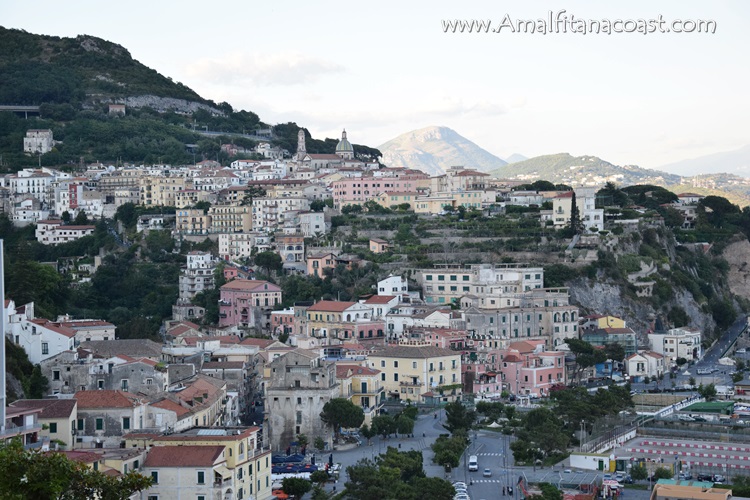
The panoramic view from the balcony of our hotel room — which became the photo that started our documentation of this coast — is still one of the best we’ve taken anywhere along the coast. That’s Vietri. It doesn’t announce itself; you have to pay attention.
Why Vietri Sul Mare Deserves More Than a Passing Glance
Vietri sits at the exact point where the Amalfi Coast meets the Gulf of Salerno — where the dramatic cliffs and switchbacks of the coast road finally relax into something more accessible. It’s the first town going west from Salerno and the last going east from Positano. For most visitors, it’s a place they notice from the car window and then pass.
That’s a mistake, and it’s one we made for years.
The town has three distinct parts: the Marina di Vietri below (beach, port, train station), the historic center on the hill above (ceramics, churches, narrow lanes), and the scattered residential areas between them. Each has a completely different feel. The ceramics are the obvious draw, but the panoramic views from the historic center — over the whole sweep of the Gulf of Salerno, with Salerno’s cathedral visible in the distance and the coast stretching west behind you — are as good as anything you’ll find in the more famous towns.
The practical case for Vietri is also strong: it has the only train station on the Amalfi Coast, direct bus connections to Salerno and along the coast, one of the better parking situations in the area, real beaches, and hotel prices that are consistently lower than Amalfi or Positano for equivalent quality. If you’re traveling on a budget or arriving by train, it deserves serious consideration as a base.
The Ceramics — What Makes Vietri Different
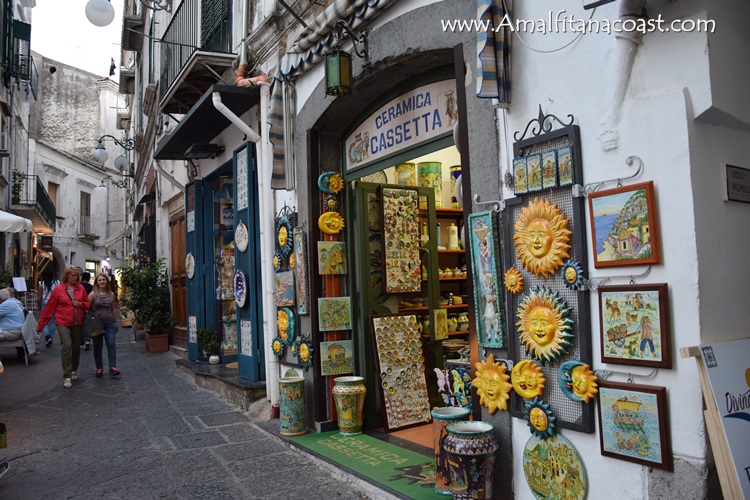
Vietri sul Mare has been making hand-painted ceramics since at least the 15th century, and the tradition here is meaningfully different from the tourist ceramic shops you find in Positano or Amalfi. In Vietri, the workshops are working production facilities — you can watch artists painting, see pieces at different stages of firing, and buy directly from the family that made it. The quality range is wide (there’s tourist-grade stuff too) but the genuine artisan pieces are identifiably superior: heavier, more complex in decoration, with the slightly imperfect variation that marks handwork from a living tradition.
The characteristic Vietri palette is yellow, green, and blue — the same colors visible on the dome of the Church of San Giovanni Battista, which is recognizable from kilometers out to sea. The motifs are typically maritime and natural: fish, lemons, waves, geometric borders derived from Arab influence via the medieval trade routes that shaped this whole coast.
Each family workshop has its own style, its own signature motifs, its own way of applying color. Buying from one is buying from a specific person with a specific history, not from a production line. Ask who made the piece you’re interested in. In the better workshops, someone will tell you.
The Provincial Museum of Ceramics (Museo della Ceramica)
Housed in Villa Guariglia in the Raito neighborhood above Vietri, the museum documents the history of ceramics production on the Amalfi Coast from the medieval period to the present day. The collection includes pieces from the major production periods, including the extraordinary mid-20th-century phase when German and other Northern European artists came to Vietri and blended their modernist aesthetic with the local tradition — producing some of the most distinctive ceramics in southern Italian history.
The museum is a short drive or taxi ride from the center and is often missed by visitors. Worth an hour, particularly if you’re buying ceramics and want to understand what you’re looking at. The surrounding Villa Guariglia gardens also have coastal views worth seeing.
What to See in the Historic Center
Church of San Giovanni Battista
The most photographed building in Vietri sul Mare: a Baroque church with a dome covered in yellow and green majolica tiles that shines in the sun and serves as the town’s landmark from the sea and the highway. The dome was made by local craftsmen and is considered one of the finest examples of majolica architectural decoration on the coast.
The interior is less spectacular than the exterior but contains some interesting 17th and 18th-century paintings and a notable collection of ceramic pieces. Free to enter. The square in front of the church is the social center of the upper town and one of the better spots to sit and watch life go past.
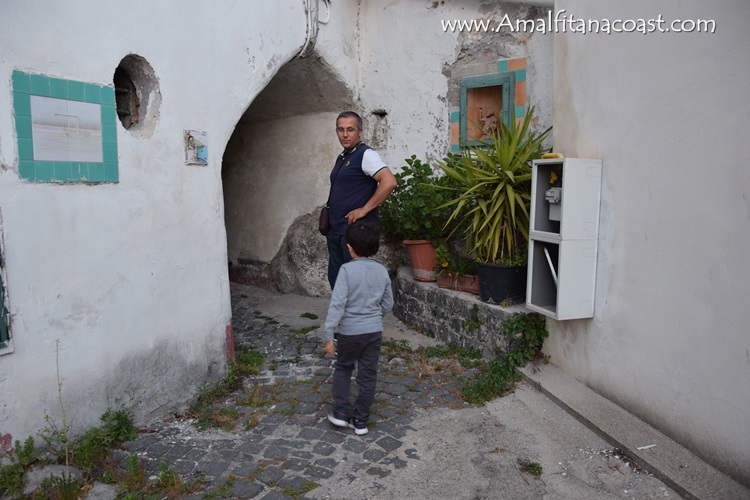
The Ceramic Murals
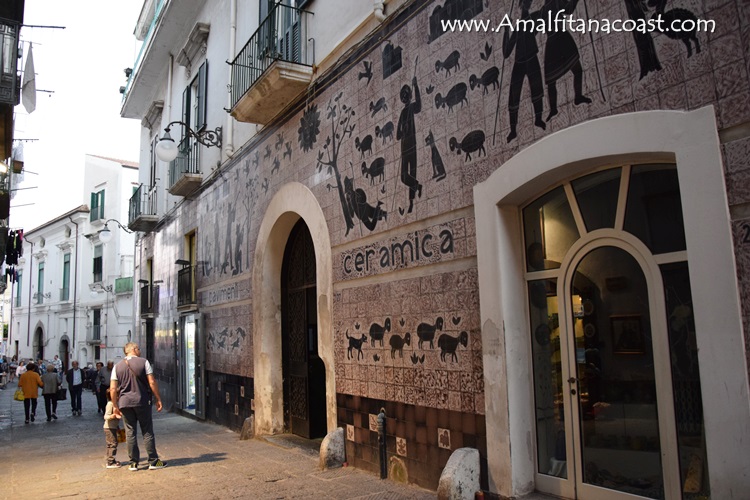
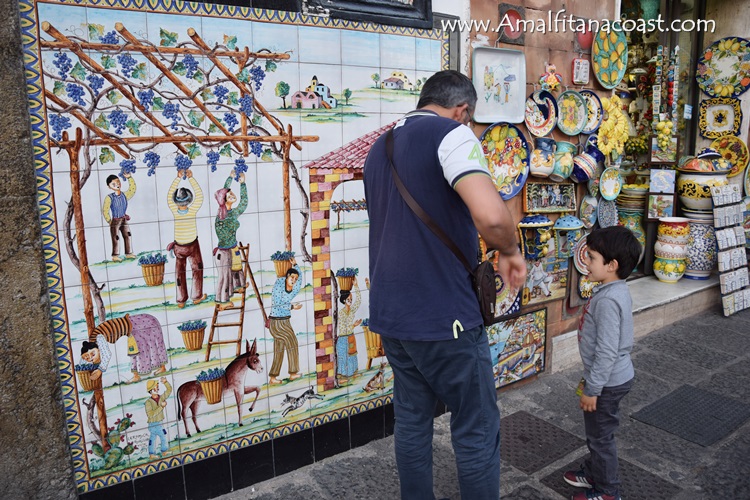
Throughout the historic center and in the surrounding streets, you’ll find large ceramic murals decorating walls, steps, and building facades. These are not decorative tourist installations — they’re part of a long tradition of public ceramic art in Vietri. Some depict local life and history; others are purely ornamental. Our favorite is in one of the upper lanes of the center: a detailed mural depicting the wine-making process, which is where we took one of the photos that has most surprised us — watching our son try to understand fermentation from a ceramic explanation.
The Medieval Towers
Like most Amalfi Coast towns, Vietri was defended by a series of watchtowers built to warn of Saracen raids. Three are still visible:
Torre della Marina di Vietri — the most accessible, near the beach area below the town. Dates to the medieval period and stands as the gateway between the seafront and the lower town.
Belvedere Torretta (Riato) — a smaller tower in the Riato hamlet above the historic center, with excellent views over the gulf. The walk up to it passes through residential streets where you’ll see Vietri entirely without tourists.
Torre di Dragonea — the furthest tower, in the Dragonea hamlet at the top of the hill behind town. The most demanding to reach but the most panoramic. The hamlet itself is a glimpse of mountain village life completely unlike the coastal towns below.
The Night View
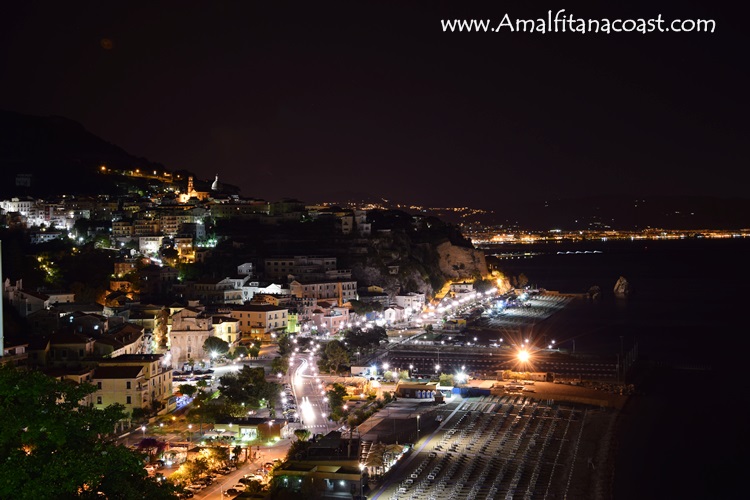
One of the things that surprised us most about Vietri was the night view. The lights of Salerno across the gulf, the illuminated harbor below, the coast stretching west toward Cetara and Maiori — from any terrace or viewpoint in the upper town, this is one of the most beautiful evening panoramas on the Amalfi Coast. Most visitors don’t stay to see it. That’s their loss.
The Beaches
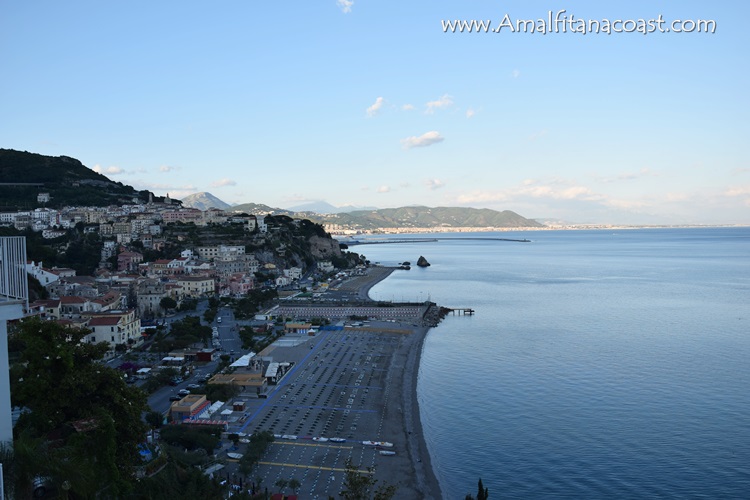
Vietri has three main beach areas, each with a different character. An honest note about all of them: because of the proximity to the port of Salerno, the water here is occasionally less clear than in the more exposed parts of the coast further west. In calm conditions it’s fine; after strong winds or port activity it can be less appealing. In our experience, the water is acceptable most days and genuinely clear on many — it’s just not guaranteed to be the crystalline turquoise of Positano.
Marina di Vietri
The main beach, wide and accessible, running parallel to the lower road below the town. Has both free sections and private beach clubs — expect to pay around €15–25 per person for a sunbed and umbrella at the lidos. Good facilities: bar, showers, changing rooms. The beach is larger than most on the Amalfi Coast and genuinely easy to reach — the train station is close, and there’s parking. In peak season the private sections book ahead; the free sections are first-come, first-served.
La Baia
A wider, sandier beach further south toward Salerno — quieter than the main beach and with easier access by car or bus from Vietri center. More popular with local families than with tourists. The water tends to be calmer here due to the protected position. Not as scenically dramatic as the main beach but genuinely more relaxed in feel.
La Crestarella
The most distinctive of the three — a smaller beach enclosed by the medieval towers on either side, creating a peculiarly beautiful setting. Has both a free section and a private lido. The private lido charges more than the others (€14–36 depending on position and day) but the setting justifies it for at least one visit. You swim with the towers above you and the coast stretching in both directions. Book ahead for the lido in summer; the free section is much smaller than at the other beaches.
What to Eat in Vietri sul Mare
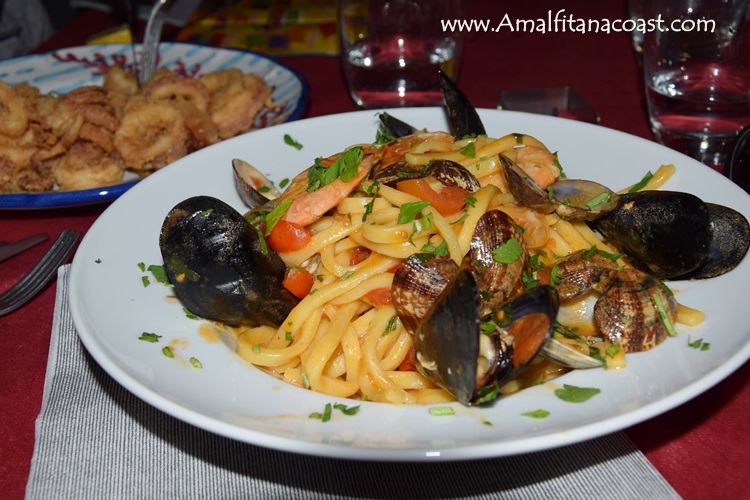
Vietri’s food scene is solidly Campanian coastal — fresh fish, local pasta, simple ingredients treated well. Because the town is less touristic than Positano or Amalfi, the restaurants here tend to be more honest in their pricing and less likely to serve mediocre food at inflated rates. This is a meaningful practical advantage if you’re spending several days on the coast.
What to order without hesitation:
Scialatielli ai frutti di mare — the thick, handmade pasta of the Amalfi Coast with mixed seafood. The best version we’ve had in Vietri came from a restaurant with no particular reputation, on a side street off the historic center, made entirely by hand. Order it everywhere and judge by comparison.
Frittura mista — mixed fried fish and seafood, typically including anchovies, calamari, small shrimp, and whatever was caught that day. At its best in towns like Vietri and Cetara that have functioning fishing fleets — the fish is genuinely local.
Frittura di calamari e gamberetti — squid and prawns, simply fried. Sounds obvious; in good hands it’s extraordinary.
Colatura di alici — the anchovy sauce from nearby Cetara is available in restaurants throughout eastern Amalfi Coast, including Vietri. If you see it on a pasta, order it. One of the most distinctive flavors on this coast.
Limoncello artigianale — artisanal limoncello, made from Sfusato Amalfitano lemons. Ask specifically for artigianale; the difference in flavor from industrial versions is significant. Most good restaurants have their own or a local supplier’s version.
Granita al limone or al limoncello — the mid-day treat of the coast, particularly welcome in summer. Made with crushed ice and fresh lemon juice or limoncello. Available at most bars in the center.
Where to Stay in Vietri sul Mare
Vietri is genuinely one of the best-value places to base yourself on the Amalfi Coast. Hotels and apartments here cost 30–50% less than equivalent options in Amalfi or Positano. The town has more parking than most coastal towns, a train station for arrivals by rail, and SITA bus connections running every direction along the coast.
The choice of where exactly to stay matters:
Marina di Vietri (lower town): Best for beach access and for arriving by train (station is here). Flatter terrain, easier logistics, closer to the water. The view from this level is good but not the panoramic sweep of the upper town.
Historic center (upper town): Better views, more character, more ceramics. Some climbing involved — the historic center is hilly and the lanes are steep. Worth it for the evening panorama and the morning light on the coast.
Raito (above Vietri): The hillside hamlet above the town, where Villa Guariglia and the ceramics museum are located. Quieter, greener, extraordinary views. Requires a car or taxi to access easily. Several excellent small hotels and B&Bs here that most visitors never find.
🏨 Browse and book hotels in Vietri sul Mare: One of the best-value bases on the Amalfi Coast — with a train station, real beaches, and prices well below Positano or Amalfi for equivalent quality.
👉 See all Vietri accommodation on Booking.com
Getting to Vietri sul Mare
By train — the only town on the coast with a station
This is Vietri’s unique practical advantage. The Salerno–Reggio Calabria line stops at Vietri sul Mare (specifically at the Marina di Vietri station in the lower town). From Salerno central station, the journey takes about 5–10 minutes on a regional train. From Naples, take the high-speed train to Salerno (35–40 minutes) then the regional connection to Vietri. From Rome, the high-speed train reaches Salerno in about 2.5 hours.
This makes Vietri by far the most rail-accessible town on the Amalfi Coast — for travelers arriving by train from Rome or northern Italy, it’s the most logical first stop.
By SITA bus (year-round)
The SITA bus runs along the SS163 connecting Vietri to Salerno in one direction and Cetara, Maiori, Minori, Amalfi, and Positano in the other. Frequent services throughout the day; the journey to Amalfi takes about 30–40 minutes depending on traffic. A single ticket costs around €2. In summer, buses are busy in both directions — travel with minimal luggage for comfort.
By car or motorcycle
From Salerno: about 10 minutes on the SS163 or via the A3 motorway exit. From Amalfi: 20–30 minutes west along the coast road. Parking in Vietri is genuinely better than in most coast towns — there’s a parking area in the lower town near the beach and another at the entrance to the historic center. Not free, but available, which is more than can be said for Positano.
The eastern stretch of the SS163 between Vietri and Salerno is one of the most dramatic arrivals on the coast — the road emerges from the cliff above Marina di Vietri and you suddenly see the whole sweep of the Gulf of Salerno opening before you. It never gets old on the motorcycle.
By ferry (April–October, via Salerno)
Vietri itself has no ferry pier, but Salerno — about 5 kilometers east — has regular ferry connections to Amalfi, Maiori, Minori, Positano, and Capri in summer. For visitors basing themselves in Vietri, the Salerno ferry is the most practical way to reach the western coast towns without the bus.
🚢 Tours and day trips from the Salerno/Vietri area: Boat tours of the coast, guided excursions to Positano, Amalfi, and Capri, and transfers from Naples airport.
👉 Browse tours from the area on GetYourGuide
Vietri as a Base for the Eastern Amalfi Coast
If you’re primarily interested in the eastern half of the coast — Cetara, Maiori, Minori, Atrani, Amalfi — Vietri is one of the best places to base yourself. It’s within 20–30 minutes of all of them by bus, has better parking than any of them, and is generally 30–40% cheaper in accommodation. The train connection to Salerno and Naples adds flexibility that no other coast town can offer.
Cetara in particular — our favorite fishing village on the coast, 10 minutes west by bus or car — is an easy daily excursion from Vietri. The colatura di alici, the tonnarella fishing tradition, the completely un-touristed atmosphere: all of it within reach of a Vietri base.
Practical Tips for Vietri sul Mare
Go into the workshops, not just the shops. The best ceramics in Vietri aren’t in the showrooms facing the main street — they’re in the working studios behind them, where you can watch the painting and see the full range of production. Ask if you can see the workshop. Most will say yes.
The historic center requires climbing. It’s not as extreme as Positano, but the lanes between the lower town and the historic center are steep and often stepped. With luggage, plan your accommodation position carefully.
Check the water quality before committing to a beach day. The proximity to Salerno’s port means the water clarity varies more than at the western coast towns. On a calm day after several days without port traffic, it’s beautiful. On other days, less so. Ask locally or check the day’s water quality if it matters to you.
The ceramics are excellent souvenirs but fragile to travel with. Most workshops will pack pieces carefully and can arrange shipping for larger purchases. If you’re buying plates or tiles, confirm the packing before you carry them.
Evening in the upper town. The best time to be in Vietri’s historic center is the hour before and after sunset — the light on the gulf, the church dome lit from below, the sound of the town winding down for the evening. Almost no tourists. One of the quieter pleasures on this coast.
We’ve been visiting Vietri sul Mare for over 15 years — sometimes as a destination in itself, sometimes as the gateway to the coast in both directions. The photo from our hotel balcony that began our documentation of this coast was taken here. All photos in this article are ours. Questions? Leave a comment below.